Comparing sliding vs swing gates for your Cape Town home? Start with the entrance layout before choosing the look. A gate needs room to open, clear the ground and work with your parking and pedestrian access.
These seven checks will help you prepare a useful brief and compare quotations. The aim is a gate that suits the property, with the necessary installation work, finish and automation clearly included.
In this guide
Sliding vs swing gates: the practical difference
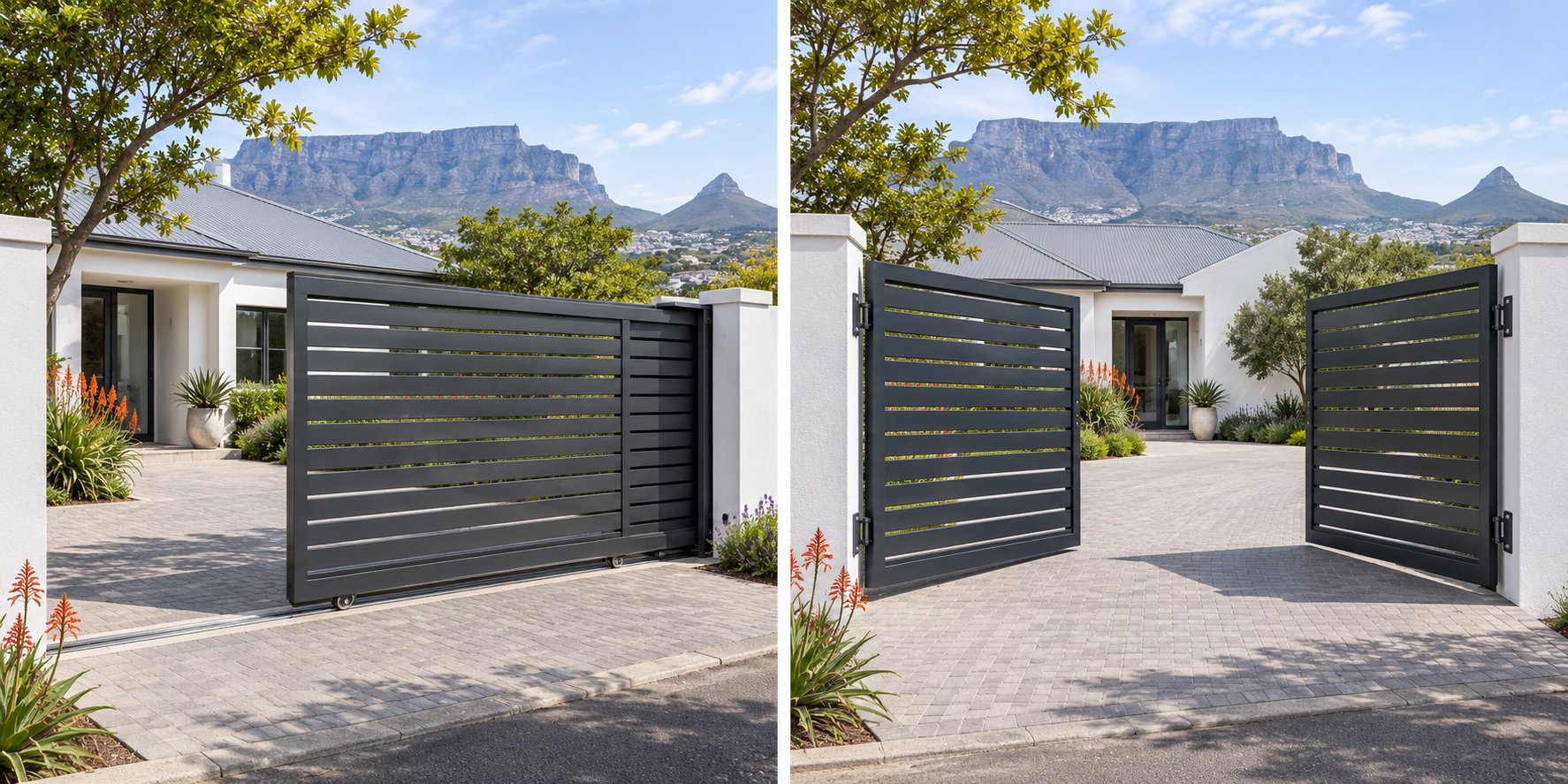
A sliding gate moves sideways beside the entrance. A swing gate opens on hinges, either as one leaf or two. Neither is automatically the best choice for every Cape Town property: the available movement space, ground levels and intended use decide what can work.
A sliding design can preserve parking space behind the entrance, but needs a clear area beside it. A swing design can suit a boundary with little side space, provided its opening arc stays clear. Confirm the layout before choosing a pattern or motor.
1. Measure the opening and the space around it
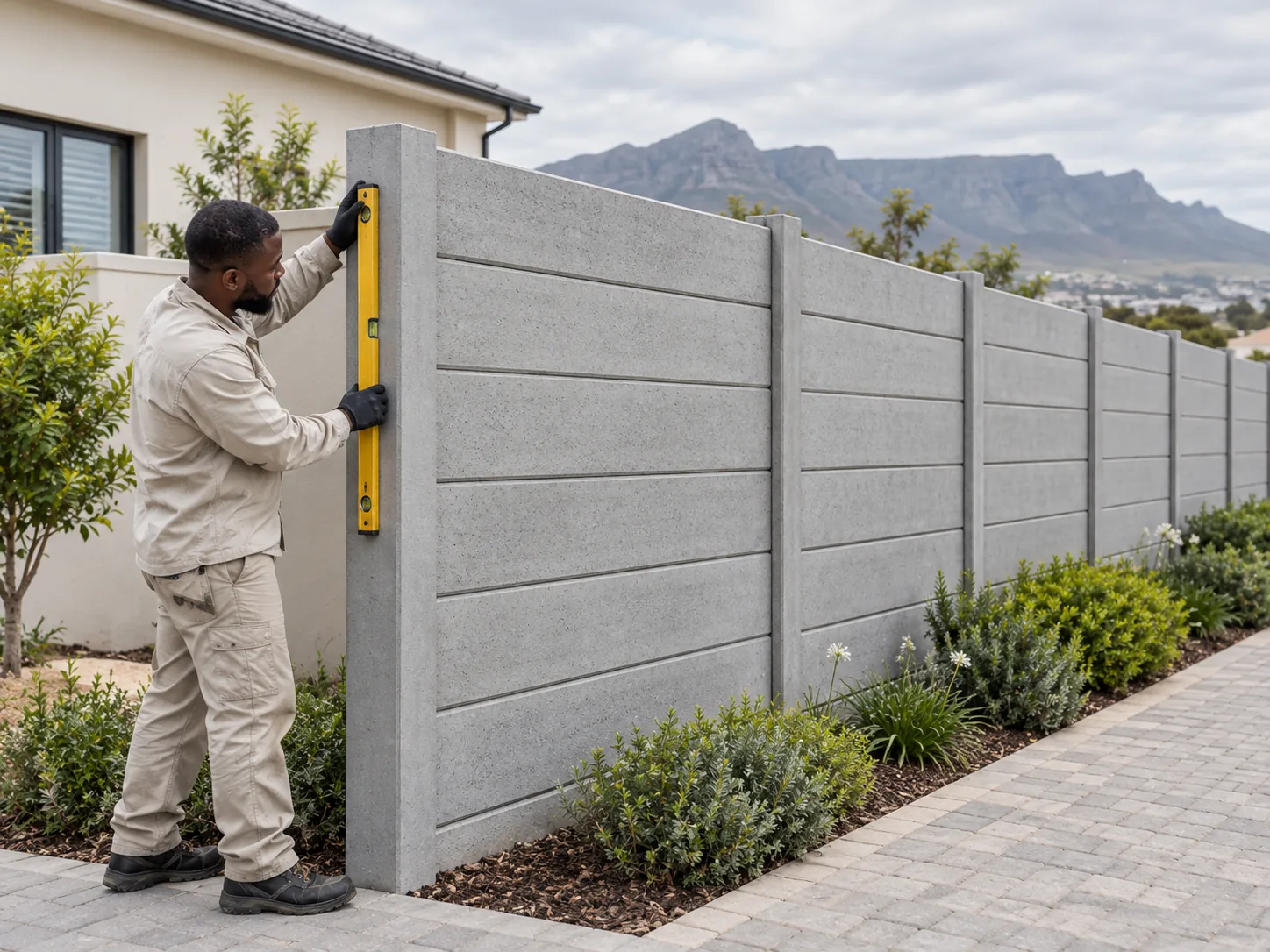
Start with the usable vehicle opening, then consider where the gate will sit when fully open. For a sliding gate, include the complete gate length, overlaps, guides, stops and motor position in the layout. Do not assume that a gap beside the driveway equal to the opening width will always be enough.
For swing gates, check the whole sweep of each leaf against parked cars, walls, steps, planting and the garage approach. A double-leaf arrangement changes the space needed by each leaf, but still needs proper clearance. When comparing sliding vs swing gates, ask for the proposed movement to be shown on the site before fabrication.
2. Check the driveway slope and drainage
An entrance can look level from the road while rising sharply inside the property. A swing leaf may catch the paving before reaching its intended open position. Increasing the bottom gap without considering security and appearance is not a complete solution.
A sliding gate also needs a properly designed travel path. It should not be expected to run downhill and rely on the motor to hold it. Ask the installer to assess levels, foundations, drainage and any paving changes together. Water, sand and leaves collecting around a ground track can make upkeep harder.
3. Match the gate design to wind exposure
Privacy panels affect more than appearance. A solid gate presents more area to the wind than an open-bar design. Leaf length, height, infill and exposure therefore belong in the discussion before the motor or hardware is selected.
CENTURION’s gate-operator documentation includes model-specific limits and installation guidance. Ask the installer to check the actual gate against the selected product’s requirements. A motor’s headline weight rating alone does not settle whether a large, clad swing gate suits an exposed entrance.
4. Plan automation, safe movement and everyday access
Decide who uses the entrance: cars, visitors, delivery drivers and people on foot may need different access arrangements. Consider whether a separate pedestrian gate would be useful. Keep people and parked vehicles out of the gate’s movement area.
For automated sliding vs swing gates, ask the installer to specify the operator, mounting arrangement, safety devices and electrical work as one system. CENTURION’s D3 SMART installation manual calls for assessment of clearances, gate condition and additional protection against entrapment. The manual for the actual model must guide its installation.
Request a demonstration of normal operation and the manufacturer’s manual-release procedure at handover. Confirm what happens during a power interruption, which backup components are included, and how they are maintained. Do not assume every package offers the same backup capacity.
5. Specify the steel finish and future maintenance
The choice between sliding vs swing gates does not remove the need for a suitable corrosion-protection system. Ask whether the quotation covers painted steel, hot-dip galvanising after fabrication, or a compatible colour finish over galvanising.
Our guide to galvanised versus painted steel gates in Cape Town explains the coating options. Choose the specification around exposure, preparation and maintenance expectations rather than a promise of a fixed lifespan.
Confirm who repairs coating damage after installation and which care instructions apply. Hardware needs attention too: discuss inspections of hinges, wheels, guides and stops with the installer. Follow the relevant manufacturer’s maintenance guidance rather than applying an unspecified lubricant to every component.
6. Compare complete quotations
Comparing sliding vs swing gates on the fabrication price alone can hide important differences. Request a written scope that identifies dimensions, steel sections, infill, coating, hardware, installation and the work needed around the entrance.
Check whether the price includes removing the old gate, disposal, posts or pillars, foundations, track or hinge supports, paving reinstatement, automation, wiring, safety devices and remotes. Ask which items are excluded and how unexpected site work will be agreed. Two quotes become useful comparisons only when their scope is clear.
If the gate forms part of a wider boundary project, the guide to Vibracrete wall cost factors can help you separate the wall work from the gate allowance. Obtain a site-specific quotation rather than applying a generic price to a different opening.
7. Agree on the checks before handover
Before approving the job, agree what completion includes: the finished opening, consistent clearances, smooth movement, secure fittings, tidy reinstatement and the specified coating. Automated installations should include installer testing and a clear explanation of the controls and safety features.
Keep the final quotation, product details, written warranty terms and care instructions together. Ask whom to contact if the gate starts dragging, becomes difficult to move or repeatedly stops. Avoid repeatedly operating a faulty gate while waiting for help.
Which option should you choose?
Shortlist a sliding gate where there is enough clear side space and you want to preserve driveway depth. Shortlist a swing gate where side space is limited and the entrance has suitable ground levels and an unobstructed opening arc. Neither recommendation replaces measurements on site.
The useful question is which arrangement fits your entrance and daily routine with a clear installation and maintenance plan. For help comparing sliding vs swing gates, explore CM Tech’s steel gates and fences service in Cape Town.
To request a quotation, send your suburb, a photo of the entrance, approximate opening dimensions and whether you need automation. Final measurements and the specification should be confirmed before fabrication. Call 071 499 6667 or WhatsApp CM Tech.