How to Choose the Right Vibracrete Wall Height for Your Property
Choosing the right vibracrete wall height is a crucial step in protecting your Cape Town property. Whether you’re looking for added security, privacy, or aesthetic value, the height of your boundary wall can make a significant difference. In this guide, we explore the most common height options, their benefits, legal implications, and what works best for residential properties across Cape Town.
Standard Vibracrete Wall Height Options
Vibracrete slabs are manufactured in standard 300mm heights, which means your wall height options are predetermined by how many slabs you stack. Here’s what each common configuration offers:
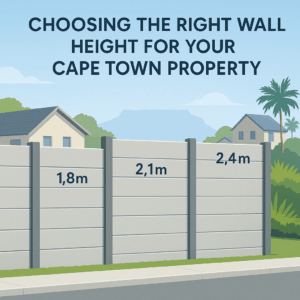
1.2m Height (4 Slabs)
This lower option works well for front-facing boundaries where you want to maintain street appeal while marking property lines. It’s often used in upmarket neighborhoods where aesthetic considerations outweigh security concerns, or where homeowners’ association rules limit wall heights. However, this height offers minimal security benefits and little privacy.
1.8m Height (6 Slabs)
The most popular choice among Cape Town homeowners, 1.8m walls strike an excellent balance between security and cost. This height deters opportunistic crime, provides reasonable privacy for ground-level activities, and typically doesn’t require municipal building plan approval. It’s tall enough to prevent easy access but not so imposing as to create a fortress-like appearance.
2.1m Height (7 Slabs)
Increasingly common in higher-risk areas or corner properties, 2.1m walls offer enhanced security without appearing excessive. This height makes unauthorized entry significantly more difficult while providing excellent privacy for outdoor living spaces. Many security experts recommend this height for properties that have experienced previous break-in attempts.
2.4m Height (8 Slabs)
Reserved for high-security applications, commercial properties, or homes in particularly challenging areas. While offering maximum protection, walls of this height may require building plan approval and can create a prison-like aesthetic that some neighbors and municipalities find objectionable.Whether you’re installing a new boundary wall or replacing an old one, choosing the correct vibracrete wall height ensures your property meets local guidelines, stays secure, and looks great. CM Tech can help you evaluate the best vibracrete wall height for your home or business in Cape Town.
Key Factors Influencing Your Height Decision
Crime Statistics and Local Risk Assessment
Research your specific suburb’s crime statistics through the South African Police Service’s crime mapping tools. Areas with higher rates of property crime naturally warrant taller walls. Consider speaking with your neighborhood watch or security company about recent incident patterns. Properties on corner stands, backing onto vacant land, or adjacent to informal settlements typically benefit from additional height.
Municipal Regulations and Building Plan Requirements
Different Cape Town municipal areas have varying requirements for wall heights. Generally, walls under 1.8m don’t require building plan approval, while anything higher may need municipal consent. The process can take 6-8 weeks and costs additional fees, so factor this into your timeline and budget.
Budget Considerations Beyond Initial Installation
Each additional slab layer increases your costs in multiple ways. Taller walls require stronger foundations, more concrete, additional steel, and longer installation time. A 2.1m wall typically costs 15-20% more than a 1.8m wall, while a 2.4m wall can cost up to 30% more. Include long-term maintenance in your budgeting as well.
Aesthetic Integration with Property Design
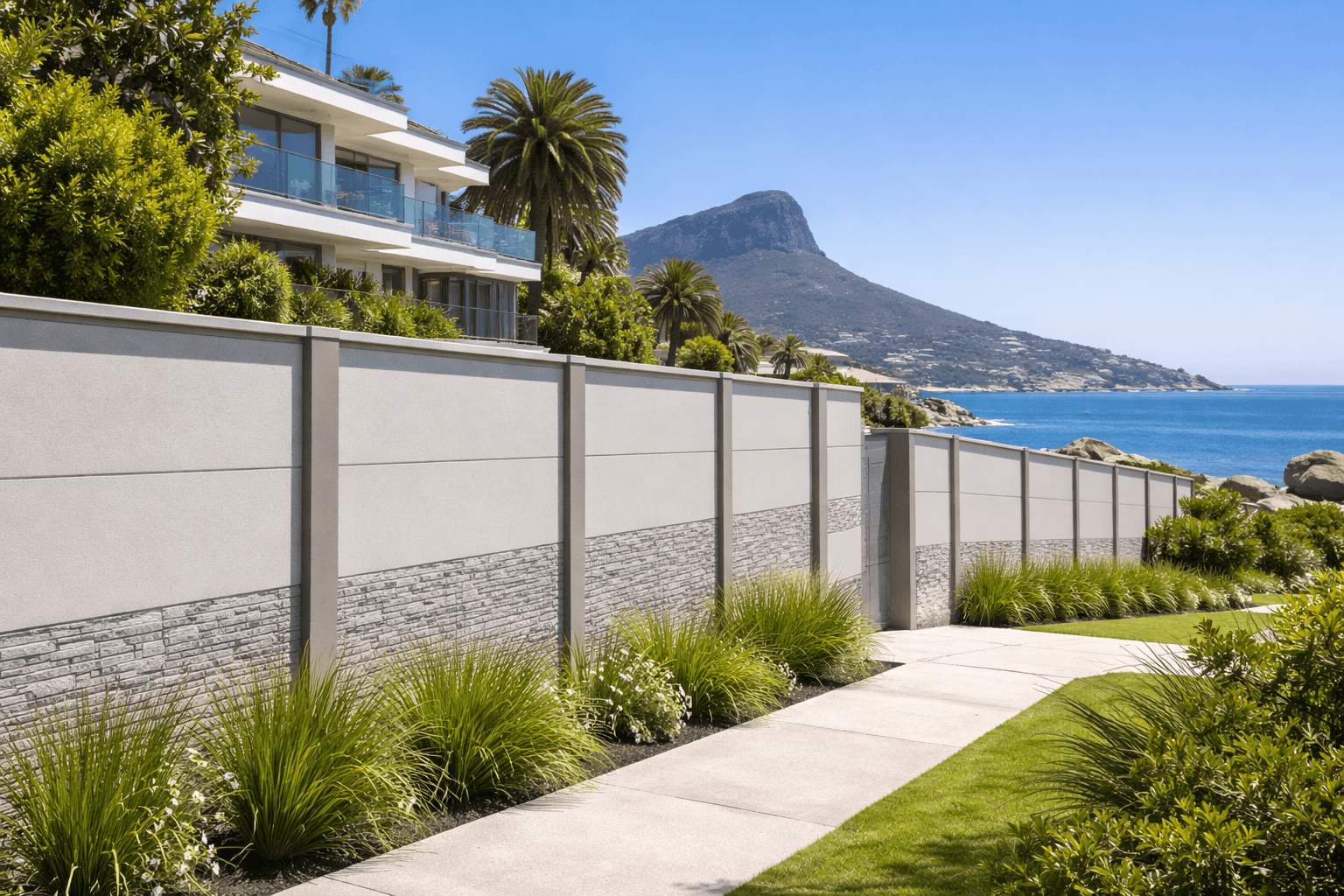
Your wall height should complement your home’s architecture and the neighborhood’s appearance. A 2.4m wall might look appropriate around a double-story house but could overwhelm a single-story cottage. Consider light loss and possible neighbor objections as well.
Technical Considerations for Different Heights
Foundation Requirements
Taller walls demand deeper, stronger foundations. A 1.8m wall requires a 400mm foundation, while 2.1m+ may need 500–600mm with more reinforcement. Cape Town’s clay soil may require special engineering solutions.
Wind Loading and Structural Integrity
Cape Town’s southeasterly winds stress tall walls. For walls over 2.1m, consider structural engineering to ensure long-term stability. This may include reinforced support posts and certified installation.
Security Enhancement Options by Height
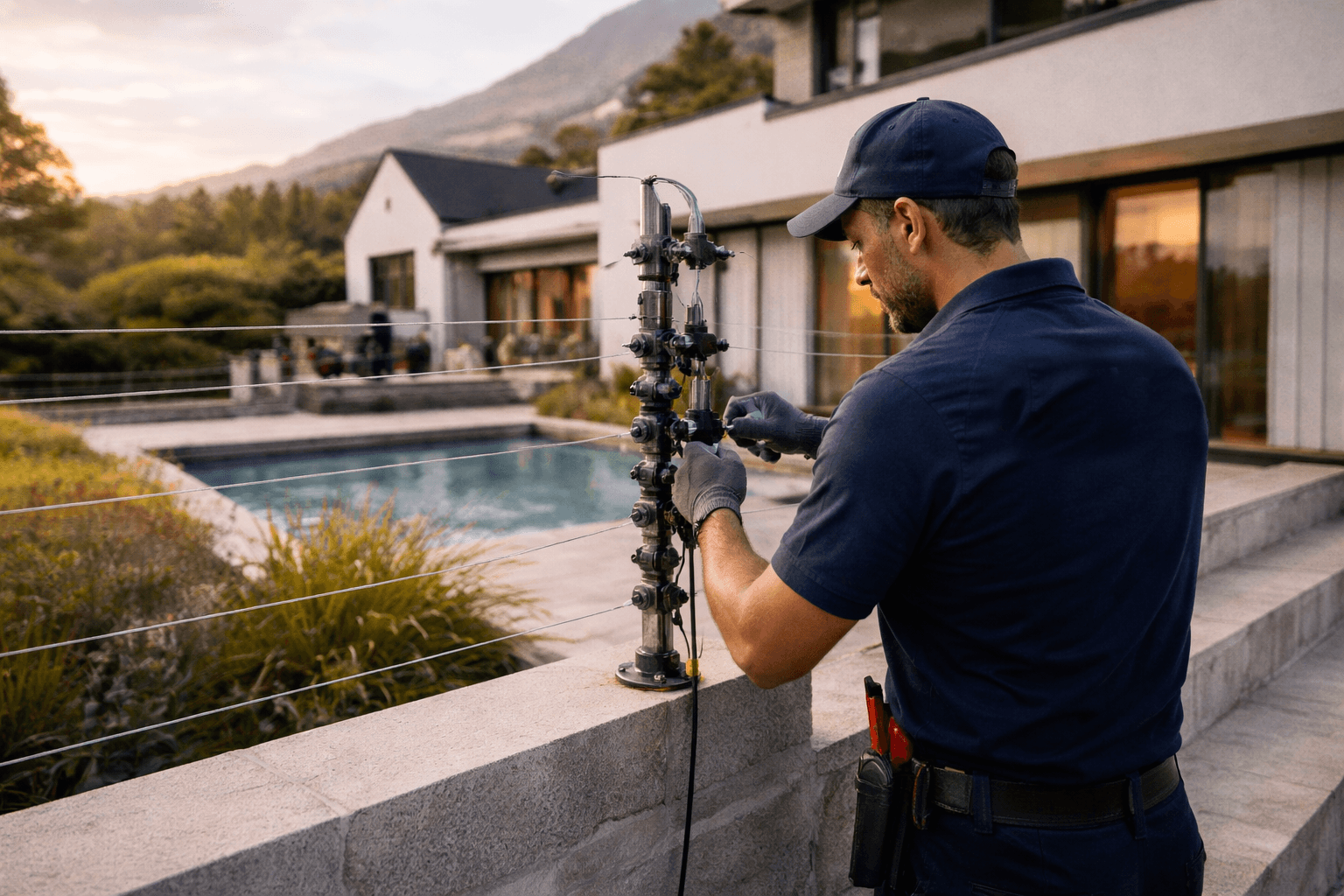
- 1.2–1.8m walls: Benefit from added deterrents like electric fencing or spikes
- 1.8–2.1m walls: May stand alone in low-risk areas or include lighter deterrents
- 2.1m+ walls: Provide strong security by themselves; fencing optional
Long-term Maintenance and Durability
Taller walls are more exposed to wind and weather, increasing maintenance needs. Plan for repainting every 5–7 years, regular foundation inspections, and reinforcing weak points as needed.
Making Your Final Decision
Start with your property’s risk level, security needs, and local regulations. Consider your budget for installation and maintenance. Aim for 1.8m if you want balanced performance, and go 2.1m if you need enhanced security. Avoid overbuilding unless you have specific security threats or municipal approval. When considering the right vibracrete wall height for your property, always evaluate your unique needs. Choosing the ideal vibracrete wall height is not just about security—it’s about long-term value, aesthetics, and compliance with Cape Town building codes.
View updated South African crime statistics to assess your area’s security risk before selecting wall height.
Ready to install your vibracrete wall? Contact CM Tech today for a free site assessment and expert advice tailored to your property.
Additional Resources